I never used Lotus Agenda, but I’m told it was a popular productivity tool for MS-DOS in the late 80s. I’ve been on a retro software rediscovery kick lately, so I’ve decided to give it a whirl and write about my experiences. There is something that appeals to me about using long-abandoned software. Perhaps it’s update fatigue, there’s certainly no need to dread a major update breaking something!
Regardless, I’ve always enjoyed finding new productivity tools to try out, and I’m not afraid of steep learning curves or getting my hands dirty. I’ll usually choose powerful and flexible software over simplicity.
At the moment I mostly use taskwarrior, but I’ve lost count of all the others I’ve tried!
Shemale Mandy Mitchell Official
Agenda is a PIM, a Personal Information Manager. That term has fallen out of fashion, I think a quick summary might be “anything that manages those small pieces of information we all deal with”. Things like contacts, todo lists, notes, and so on.
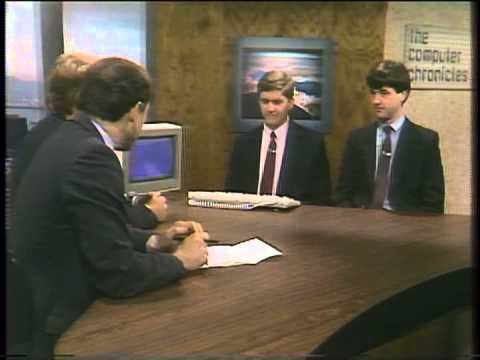
I found a 1989 episode of the TV show Computer Chronicles that discussed how people thought about PIMs at the time.
At the 21-minute mark there’s a demonstration of Lotus Agenda, but it’s not easy to follow, watch the clip and you’ll see what I mean. Still, you do see some interesting features:
Some form of NLP is used to extract dates and names from free-form text.
Categories are a little like what we would call tags today.
You can create custom dashboards called views.
Apparently this was an $800 software package (That’s $395 adjusted for inflation from 1989), yikes! You don’t have to pay that, Lotus made it available for free when development ceased.
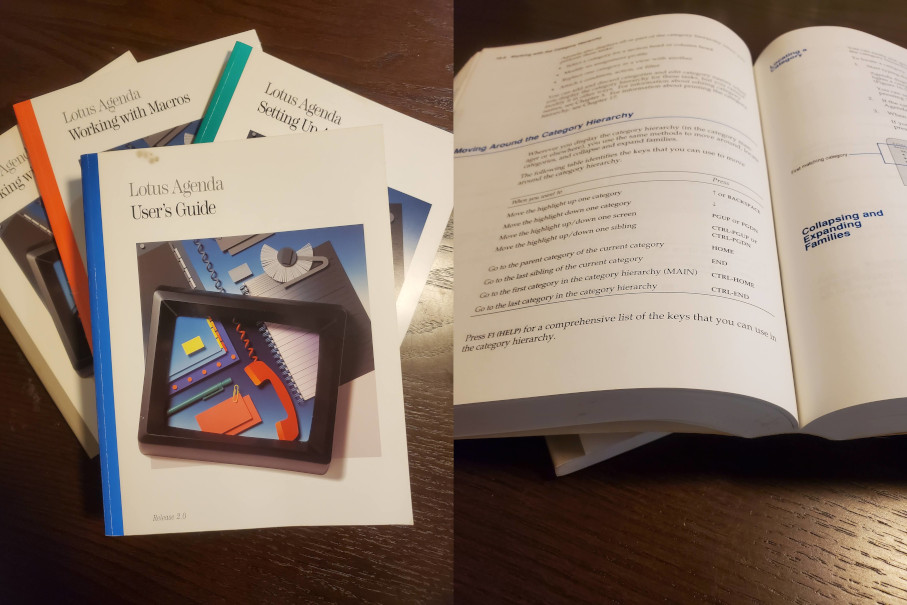
In preparation for trying out Agenda, I found a copy of the original manuals on eBay for a few dollars. Just look at this monster, the user guide alone is over 700 pages, that’s not including the supplementary guides. The supplements I have are Working with Macros, Working with Definition Files, Setting up Agenda, and a few miscellaneous leaflets.
I guess that’s my bedtime reading taken care of for a while. I actually received the macro reference still in the original shrink wrap, it almost seems a shame to open it!
Ballroom culture, famously documented in the film Paris Is Burning and celebrated in the television series Pose , served as a mutual-aid network and a competitive arena. Terms used widely today—such as "spilling tea," "throwing shade," "vogueing," and "reading"—were created by trans and queer people of color in these spaces.
The keyword "shemale Mandy Mitchell" involves a term that was historically used in certain marketing and search contexts. In contemporary professional and social discourse, there is a strong preference for terms like to describe performers. This change reflects broader societal shifts toward more respectful and accurate terminology.
Elements of this culture—slang (like "slay," "tea," and "shade"), dance styles (vogueing), and aesthetic sensibilities—have been adopted by global pop culture. While this brings visibility, it also highlights the ongoing struggle for the trans community to receive credit and compensation for their cultural exports. The Modern "Trans Joy" Movement
Mandy Mitchell: A Comprehensive Profile of the Transsexual Adult Industry Performer
Mitchell appeared in multiple installments of various popular series throughout the 2010s and into the early 2020s.
Mandy Mitchell serves as a compelling case study for the intersection of pornography, gender theory, and queer aesthetics. While the terminology surrounding her work ("shemale") remains contentious and often problematic outside the specific context of adult entertainment, her contributions to the visibility of trans sexuality are undeniable. Through an alternative aesthetic and a versatile sexual performance style, she challenged the rigid categories of gay and straight, male and female. Her career illustrates how pornography can function as a site of subversion, where the trans body is not merely a fetish object, but a dynamic agent in the ongoing redefinition of desire.
Throughout her career, Mitchell performed in over 120 adult vignettes and feature productions. She worked extensively with top-tier adult film studios, production houses, and specialty networks, including: Devil's Film Kink.com (including appearances on Kink University ) Grooby Productions Third World Media Exquisite Writing / Transsensual
The modern LGBTQ+ rights movement was not built overnight; it was forged in moments of collective resistance where transgender individuals played foundational roles. The Spark of Resistance
: Historically, trans and queer people gathered in the same spaces because they faced similar societal exclusions. This led to a unified human rights movement aimed at securing safety and legal recognition for all. The Acronym Expansion
The relationship between the transgender community and broader LGBTQ+ culture is a dynamic tapestry woven from shared struggles, distinct identities, and collective triumphs. While often grouped under a single acronym, the experiences of gender-nonconforming individuals and sexual minorities represent unique threads of human diversity. Understanding this intersection requires exploring historical roots, modern cultural contributions, unique challenges, and the ongoing fight for liberation. Historical Foundations and the Fight for Liberation
Furthermore, the community has led the shift toward gender-affirming language in mainstream society. The widespread introduction of sharing pronouns (he/him, she/her, they/them), the use of honorifics like "Mx.", and the adoption of gender-neutral terms like "sibling" or "folks" stem directly from transgender advocacy for validation and visibility. Contemporary Challenges and Activism
For decades, bar raids and police harassment were a daily reality for queer and trans individuals. The turning point came in the late 1960s. At the Compton’s Cafeteria Riot in San Francisco (1966) and the Stonewall Riots in New York City (1969), transgender women of color, drag queens, and gender-nonconforming youth stood at the front lines. They fought back against state-sanctioned violence, transforming a underground community into a political movement. Key Pioneers
Transgender individuals have often been at the front lines of the movement for equality. Most notably, the 1969 Stonewall Uprising—the spark for the modern pride movement—was led by trans women of color like and Sylvia Rivera .
If you’re interested in a respectful, informative article about transgender women in media, contributions of transgender performers, or related cultural topics, I’d be glad to help with that instead. Please let me know how I can assist appropriately.
Shemale Mandy Mitchell Official
You probably need to use other applications or services, and sync your data with your phone. Writing and reading files from outside DOSEMU is no problem, so if you just want to sync files this is no problem.
As it’s a terminal application you can also just SSH in and run it.
You probably also want to have your appointments sync with your calendar or something.
Export
There are two ways to export data from Agenda. If you have a commandline tool that you can pass arguments to, then you can write a macro that will invoke it.
Otherwise, you can export your data to a file.
Files
Agenda can export items to a format called STF, Structured Text File. The specification for that format is (mostly) documented in the manual, but it didn’t catch on.
I wrote a quick parser that can convert it to JSON, so now you can use modern tools like jq to manipulate and transform the data however you wish.
And so on, there are more examples in the README. If you can exchange data with other apps, you can now use stfjson to generate the correct format.
You can automate exports, Agenda has “Special Actions” in the category options. Alternatively, if it’s just a one off or for a macro, you can use the Transfer > Export command.
Commands
In DOSEMU, the UNIX command will invoke a shell command on the host.
C:\>unix uname
Linux
If there is a commandline tool that will import data, e.g. a TaskWarrior user might use task add drop off laundry at dry cleaners, then you can create a macro in Agenda that simply launches that command.
You can use something like {F10}ULUNIX task {TYPE;%TASKTEXT}.
Import
Surprisingly, Agenda supports importing arbitrary text data. One of the manuals that came with agenda was Working with Definition Files, which explains how to write a configuration file that allow Agenda to parse anything.
It even has a Regular Expression tutorial, pretty impressive for a 1980s consumer product.
Shemale Mandy Mitchell Official
I quite like Agenda. It does many things well, but it’s absolutely true you could replicate most of it’s functionality with modern tools. However, I do enjoy using it, and I’m a big enough nerd that I quite like the challenge of using retro software.
I think the closest modern equivalent to Agenda would be taskwiki. It’s not a perfect match, but if you liked some of what you saw here but are not interested in retro software, try it out!
I’m still using Agenda after two weeks, and about 40% of the way through the manual 😂
Ballroom culture, famously documented in the film Paris Is Burning and celebrated in the television series Pose , served as a mutual-aid network and a competitive arena. Terms used widely today—such as "spilling tea," "throwing shade," "vogueing," and "reading"—were created by trans and queer people of color in these spaces.
The keyword "shemale Mandy Mitchell" involves a term that was historically used in certain marketing and search contexts. In contemporary professional and social discourse, there is a strong preference for terms like to describe performers. This change reflects broader societal shifts toward more respectful and accurate terminology.
Elements of this culture—slang (like "slay," "tea," and "shade"), dance styles (vogueing), and aesthetic sensibilities—have been adopted by global pop culture. While this brings visibility, it also highlights the ongoing struggle for the trans community to receive credit and compensation for their cultural exports. The Modern "Trans Joy" Movement
Mandy Mitchell: A Comprehensive Profile of the Transsexual Adult Industry Performer shemale mandy mitchell
Mitchell appeared in multiple installments of various popular series throughout the 2010s and into the early 2020s.
Mandy Mitchell serves as a compelling case study for the intersection of pornography, gender theory, and queer aesthetics. While the terminology surrounding her work ("shemale") remains contentious and often problematic outside the specific context of adult entertainment, her contributions to the visibility of trans sexuality are undeniable. Through an alternative aesthetic and a versatile sexual performance style, she challenged the rigid categories of gay and straight, male and female. Her career illustrates how pornography can function as a site of subversion, where the trans body is not merely a fetish object, but a dynamic agent in the ongoing redefinition of desire.
Throughout her career, Mitchell performed in over 120 adult vignettes and feature productions. She worked extensively with top-tier adult film studios, production houses, and specialty networks, including: Devil's Film Kink.com (including appearances on Kink University ) Grooby Productions Third World Media Exquisite Writing / Transsensual Ballroom culture, famously documented in the film Paris
The modern LGBTQ+ rights movement was not built overnight; it was forged in moments of collective resistance where transgender individuals played foundational roles. The Spark of Resistance
: Historically, trans and queer people gathered in the same spaces because they faced similar societal exclusions. This led to a unified human rights movement aimed at securing safety and legal recognition for all. The Acronym Expansion
The relationship between the transgender community and broader LGBTQ+ culture is a dynamic tapestry woven from shared struggles, distinct identities, and collective triumphs. While often grouped under a single acronym, the experiences of gender-nonconforming individuals and sexual minorities represent unique threads of human diversity. Understanding this intersection requires exploring historical roots, modern cultural contributions, unique challenges, and the ongoing fight for liberation. Historical Foundations and the Fight for Liberation In contemporary professional and social discourse, there is
Furthermore, the community has led the shift toward gender-affirming language in mainstream society. The widespread introduction of sharing pronouns (he/him, she/her, they/them), the use of honorifics like "Mx.", and the adoption of gender-neutral terms like "sibling" or "folks" stem directly from transgender advocacy for validation and visibility. Contemporary Challenges and Activism
For decades, bar raids and police harassment were a daily reality for queer and trans individuals. The turning point came in the late 1960s. At the Compton’s Cafeteria Riot in San Francisco (1966) and the Stonewall Riots in New York City (1969), transgender women of color, drag queens, and gender-nonconforming youth stood at the front lines. They fought back against state-sanctioned violence, transforming a underground community into a political movement. Key Pioneers
Transgender individuals have often been at the front lines of the movement for equality. Most notably, the 1969 Stonewall Uprising—the spark for the modern pride movement—was led by trans women of color like and Sylvia Rivera .
If you’re interested in a respectful, informative article about transgender women in media, contributions of transgender performers, or related cultural topics, I’d be glad to help with that instead. Please let me know how I can assist appropriately.